
The concrete industry is in the midst of a reckoning with its CO2 footprint. In an otherwise conservative sector, where things have historically been done as they always have, Leth Beton stands out. The company produces and installs concrete and timber elements across Denmark and has chosen to take active responsibility for CO2-reduced production - using D-Carb, CO2-reduced white cement developed by Aalborg Porltand, a subsidiary of the Cementir Group , as a tangible tool.
D-Carb significantly reduces the CO2 footprint by around 15 percent compared to Aalborg White CEM I 52.5 R, thanks to clinker substitution with finely ground limestone -and it has a direct effect on construction. At the same time, the cement retains the early strengths required for element production at Leth Beton, making it possible to replace the previous white cement one-to-one without altering the production flow.
"D-Carb makes it possible. We can switch the cement one-to-one without changing our production setup," says Sara Hørlyck Molbo, Quality Manager at Leth Beton.
Customer and client demand plays just as important a role as technical requirements. More and more people want to build with a lower CO2 footprint and expect documentation in the form of EPDs (Environmental Product Declarations) and LCA (Life Cycle Assessment) calculations. "Our customers are increasingly demanding CO2-reduced solutions and documentation, both to certify constructions and meet the requirements of the EU Taxonomy," says Sara Hørlyck Molbo.
For this reason, Leth Beton advises customers early in the design phase - both on the choice of concrete and on how CO2-reduced solutions can be integrated into the construction process from the start. In the landings and stairs where Leth Beton uses D-Carb, this means a CO2 reduction of around 12 percent compared to previously used Aalborg White.
The collaboration with Aalborg Portland, and especially with technical consultant Jacob Thrysøe, has made the implementation from Aalborg White to D-Carb smooth. The cement is technically stable and reliable and works in both standard and lightweight concrete production.
The use of D-Carb is part of Leth Beton's broader sustainability strategy, which includes recycled water in production, 80 percent electricity from local wind turbines, and hybrid construction where concrete is combined with timber. Customers are advised early in the design phase so that CO2-reduced solutions can be integrated from start to finish. The goal is consistently the same: to offer customers concrete, documented solutions that both reduce the CO2 footprint and meet the requirements for modern construction projects.
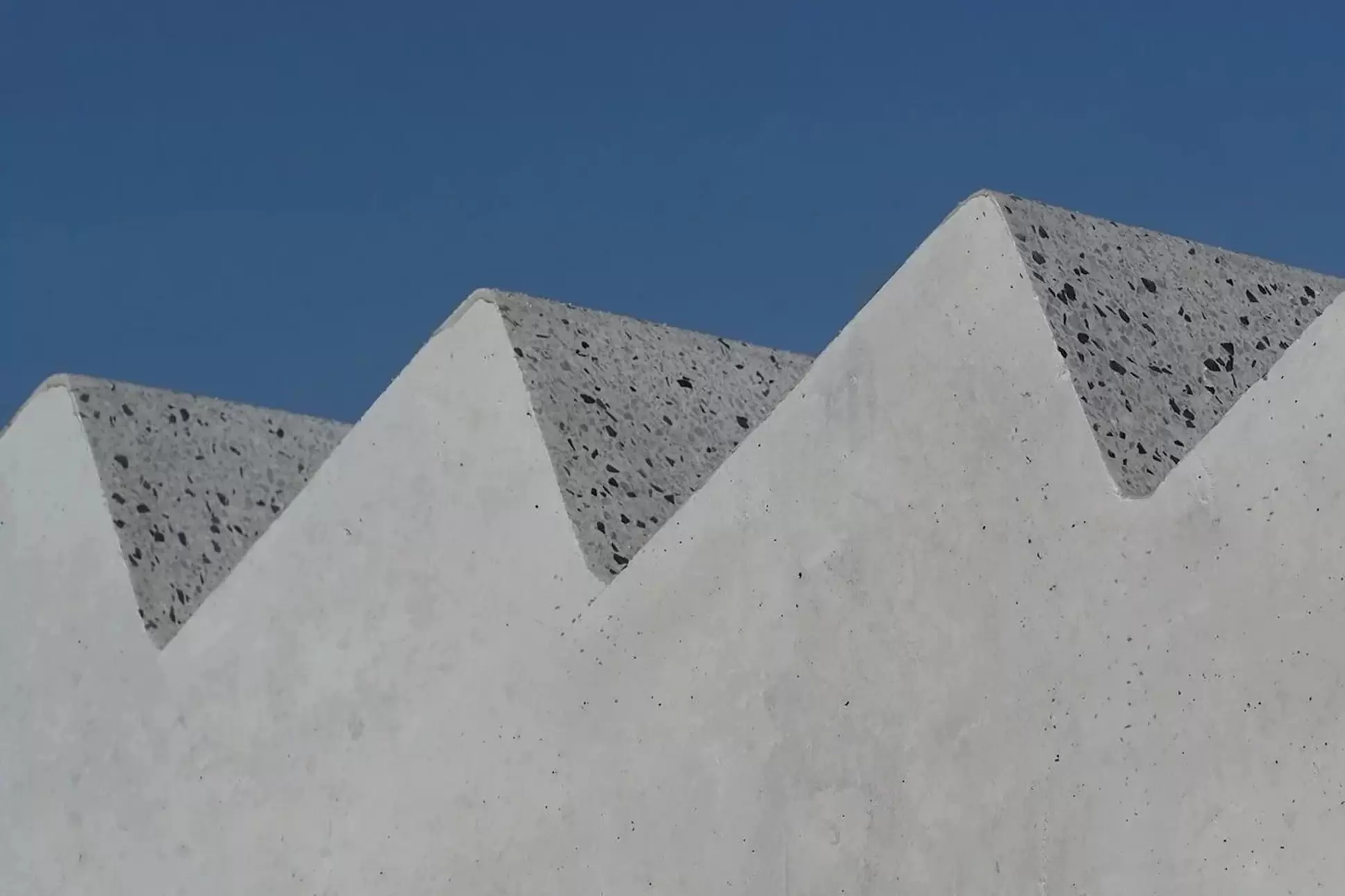
Precast stairs by Leth Beton made with D-Carb white cement, achieving around a 12% CO2 reduction compared with Aalborg White CEM I
In addition to D-Carb, Leth Beton is also working to replace its use of traditional grey cement with the CO2-reduced FUTURECEM, which offers even greater savings in the CO2 footprint for finished concrete elements where grey cement is used. With these solutions, Leth Beton can deliver products where the CO2 reduction is tangible, documentable, and visible - while maintaining quality and aesthetics.
D-Carb and FUTURECEM have thus proven to be central practical tools for companies that want to combine sustainability with efficient production - while meeting customers' increasing demand for CO2-reduced solutions.
You can find more examples of how others have replaced traditional cement types with CO2-reduced options here.
Authors

Mads Hørlyk
Marketing Coordinator, Aalborg Portland
He works with communication and marketing at Aalborg Portland, Denmark’s only cement producer. In his role, he supports brand positioning, content development, and marketing activities across corporate and commercial platforms. His work focuses on translating complex industrial and sustainability topics into clear, relevant communication for key stakeholders.
Recommended Posts
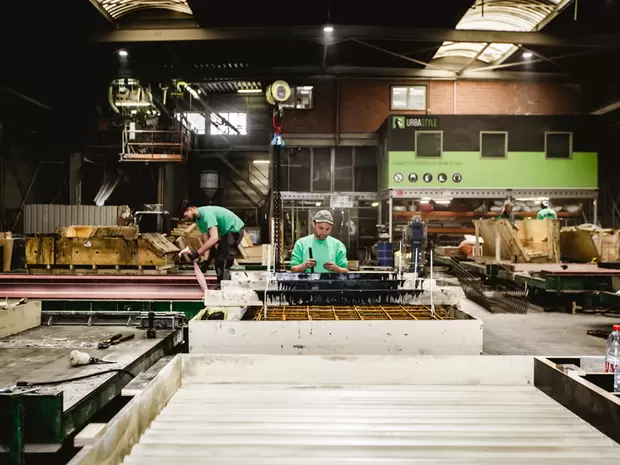
Decarbonizing Urban Spaces - URBASTYLE Adopts D-Carb Lower Carbon White Cement
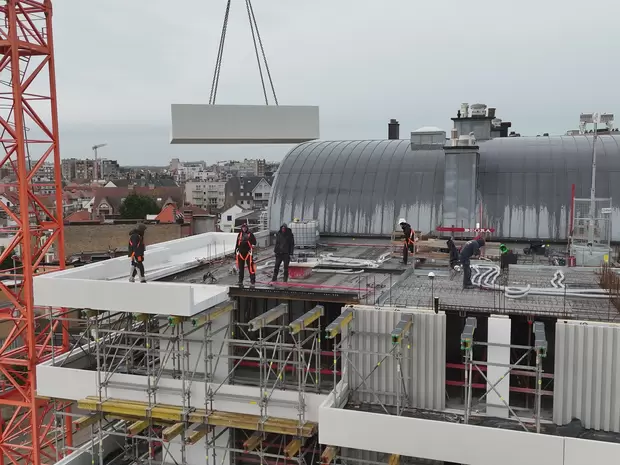
D-Carb First Used in Precast Parapets of Aquamarijn Residence, De Panne, Belgium
Share on