
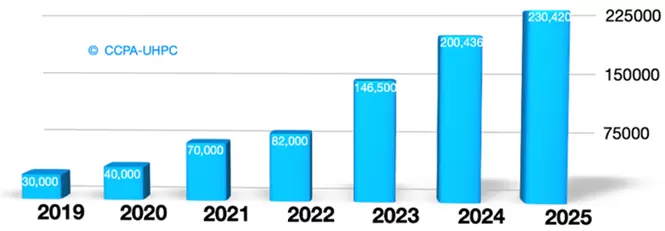
In 2025, China consumed at least 230,420 m3 UHPC – a growth of 15% compared to 2024. The highlights include: the innovative bridge structure – steel core-UHPC composite girder – was realized successfully for its first highway bridge; the technological level of automated, industrialized prefabrication of UHPC components made progress; there were new developments in products and application scenarios, e.g. subway engineering; and more.
Volume of UHPC Consumed in China
Based on the data collected via questionnaire forms received from 46 major UHPC related enterprises in China, total 230,420 m3 of UHPC were consumed for various projects and products in January ~ December 2025, and 42% UHPC was produced with premix, amounted to 211,215 metric tons. The annually consumed UHPC volumes in China are shown in the chart below, reflecting an annual composite growth rate of 40% in 2019 ~ 2025.
Volume Share of UHPC Applications
The volume distributions of UHPC consumed in 2024 & 2025 are shown and compared in the chart.
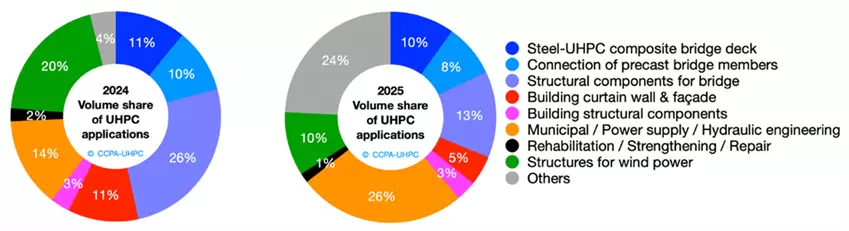
31% UHPC applied to bridges in 2025 (less compared to 2024), in which
- 10% UHPC used for steel-UHPC composite decks, total completed deck area exceeds 397,580m2
- 8% used for structural connections of precast concrete elements (wet joints), and
- 13% used for prefabricated components (girders, deck slabs, etc.), totally 30,370 m3
8% UHPC for buildings, in which
- 3% UHPC used for structural components (beam, column, staircase, etc.)
- 5% used for curtain wall and façade, total completed wall area exceeds 286,238m2
26 % UHPC applied to municipal, power supply & hydraulic engineering (major share rising)
1% UHPC for structure strengthening and rehabilitation
10% UHPC applied to wind turbine towers (30% less UHPC volume, compared to 2024)
24% UHPC for the others (major share rising), mainly consumed for various UHPC products, such as durable gutter & cover, highway guardrail, tunnel support, etc.
Highlights for Bridges
Sustained application: steel-UHPC composite deck for bridges
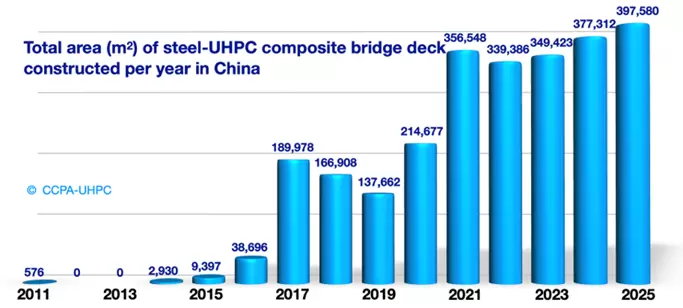
The total deck area 397,580 m2 of steel-UHPC composite deck for 66 new bridges and old bridge rehabilitation completed in 2025, and this UHPC application keeps steady, compared to the previous four years, as shown in the chart below. In 2011 ~ 2025, total deck area of steel-UHPC composite bridge decks accumulated to 2.58 million m2 for 353 bridges in China, and the construction technology and equipment are being continuously improved.
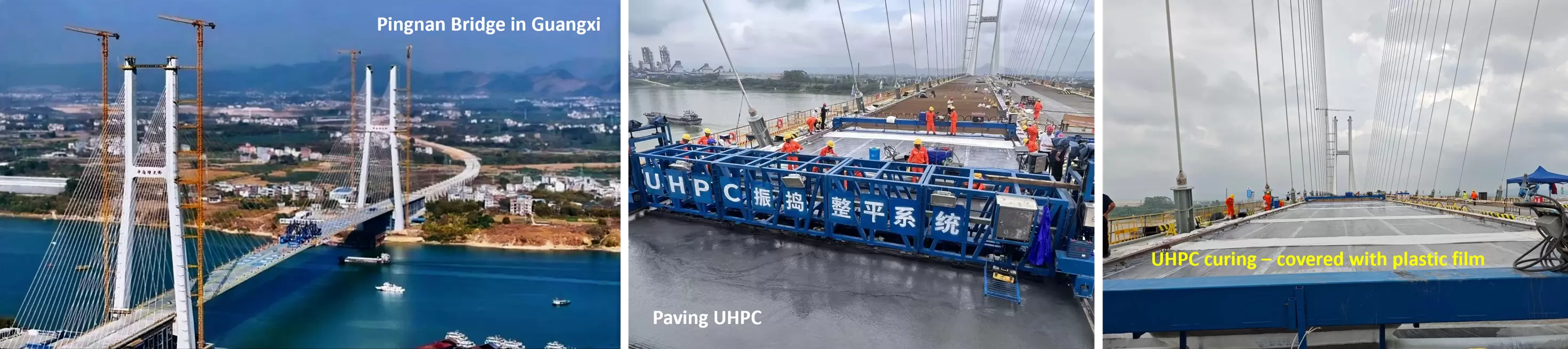
One example: Pingnan Bridge in Guangxi – a cable-stayed bridge with main span 636m, its steel box girder with total deck area 14,500m2 was paved with UHPC on-site to form steel-UHPC composite deck (see pictures below). UHPC sub-contractor: Hunan Zhonglu Huacheng Bridge Tech. and 1st Highway Bureau of CCCC.
Innovative structures: Steel core-UHPC composite box girder and successful 1st application
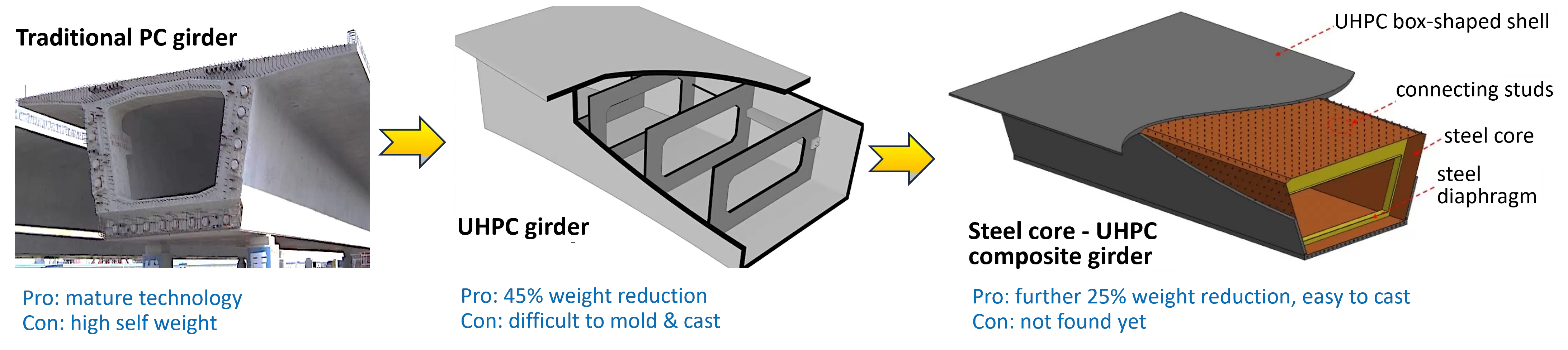
The innovative steel core-UHPC composite box girder, developed by the UHPC Bridge R&D Team of Hunan University based on systematic researches over four years, had been succeefully realized for its first highway bridge. The structure of steel core-UHPC composite box girder, and comparison with traditional prestressed concrete & UHPC box girders are presented in diagram below.
The first highway bridge conctructed with this steel core-UHPC composite box girder is the No.2 Ramp Bridge with spans of 40m + 60m + 40m of G59 Expressway Xin-Xin Section, which crosses over G60 Expressway (Shanghai-Kunming). This ramp bridge, with width 10.5m, height 2.3m, height/span ratio 1/26, and a standard transverse slope of 2%, adopts a single-box and single-chamber steel core box structure consisiting of 8mm thick top & web plate, 16 mm thick bottom plate. The steel core box is laminated with UHPC (fcuk=140MPa, ftuk=8MPa) – 130mm thick on web, 100mm thick on top. The thickness of R-UHPC wing changes from 250mm to 120mm. The construction steps are presented in the diagram below: assembling the welded steel core on site, then forming the UHPC laminations (UHPC poured in 3 sections with length 50m, 57m and 33m respectively), and steam curing UHPC at 60°C ~ 90℃ for 48h; installing steel guardrails, and then pushing the girder into place. During the girder erection – jacking process, the underneath G60 Expressway – one of the busiest expressway in China – kept open to normal traffic. The bridge construction is illustrated in the diagrams & pictures below. Bridge contractor: Zhongye Road & Bridge Construction; UHPC sub-contrctor: Hunan Zhonglu Huancheng Bridge Tech.
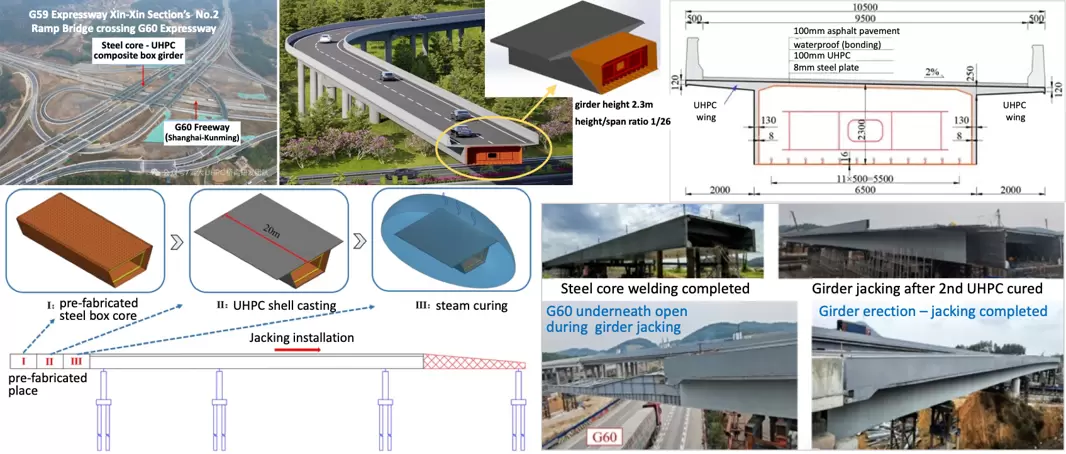
This first highway bridge of steel core-UHPC composite box girder was completed in Oct. 2025, and well passed the load tests in Dec. 2025, open to traffic on Jan. 26, 2026. Its construction cost had been reduced for 27% in comparison to original design of steel box girder. It consumed main materials: steel 249.4 kg and UHPC 0.193 m3 per square meter of deck area. The analysis shows and the practice verified that the advantages of this new bridge box girder include:
• Lightweight: self-weight reduced by 60–70%, compared to prestressed concrete (PC) box girder;
• Cost-effective: 20–30% cost lower in comparison to steel box girders;
• Easier construction: no complex inner molds required for UHPC casting, construction simplified;
• High fatigue resistance: fatigue stress less than 25 MPa at the steel core welds;
• High durability: given steel core made of weathering-resistant steel, almost no maintenance needed during the service period;
• Wide applicability: economically suitable for bridges with spans of 50–500 m, and girder height to span ratio up to 1/30.
UHPC girder and components: efficient production
Light UHPC I-girder bridge system
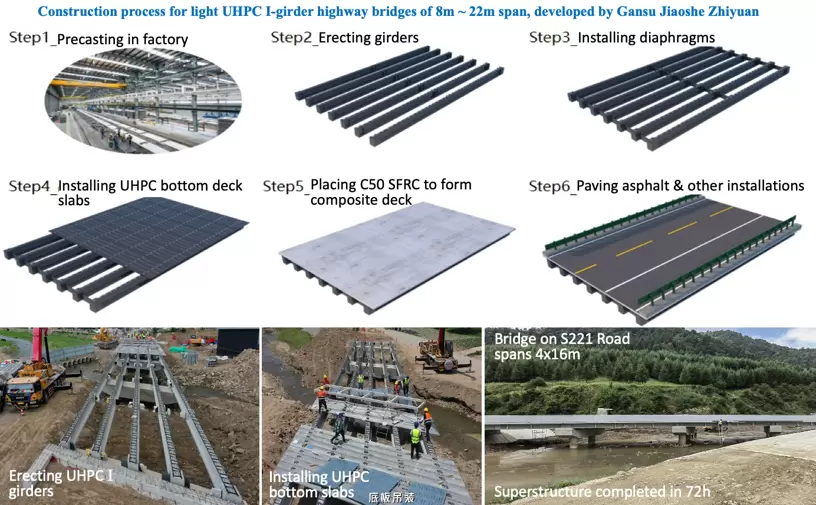
In Gansu Province, the number of light UHPC I-girder highway bridges of span 8m ~ 22m, developed and constructed by Gansu Jiaoshe Zhiyuan, kept growing, and 40 bridges (total bridge length 1,500m & deck area 18,750m2, consisting of 91 spans & 695 girders) had been completed and put into service at end of 2025. The structural performance of light UHPC I-girder bridges has been verified by all the real bridges with substantial testing and continous monitoring, which also indicates that such bridges would have high safety reserve and long service life while low mantenance needed.
The construction steps of light UHPC I-girder bridge are described in the diagram below. From the practices & experiences, the following advantages of this bridge system have been recognized:
• High efficiency of material utilization: prestressed UHPC girder and slab – well exerting the high mechanical properties of UHPC, thus leading to 50% saving of cementitious materials and 80% saving of steel reinforcement, compared to traditional concrete bridge;
• Standardized and industriallized prefabrication: high production efficiency and high quality ensured;
• Light weight of bridge components: easier for transportation, lift and installation;
• Fast construction: no formwork needed, fast for every step of installation (see the example of a 4-spans bridge below);
• Low cost: almost the same cost, compared to traditional concrete bridge;
• High durability: using UHPC to deal with harsh, aggressive environment.
There are tens of light UHPC I-girder bridges under construction, hundreds of such bridges under planning. Therefore, another two factories for precasting UHPC girders, slabs and new type of UHPC cap-beams had been established by Gansu Jiaoshe Zhiyuan.
Precast UHPC bridge deck slab for steel-UHPC composte girder
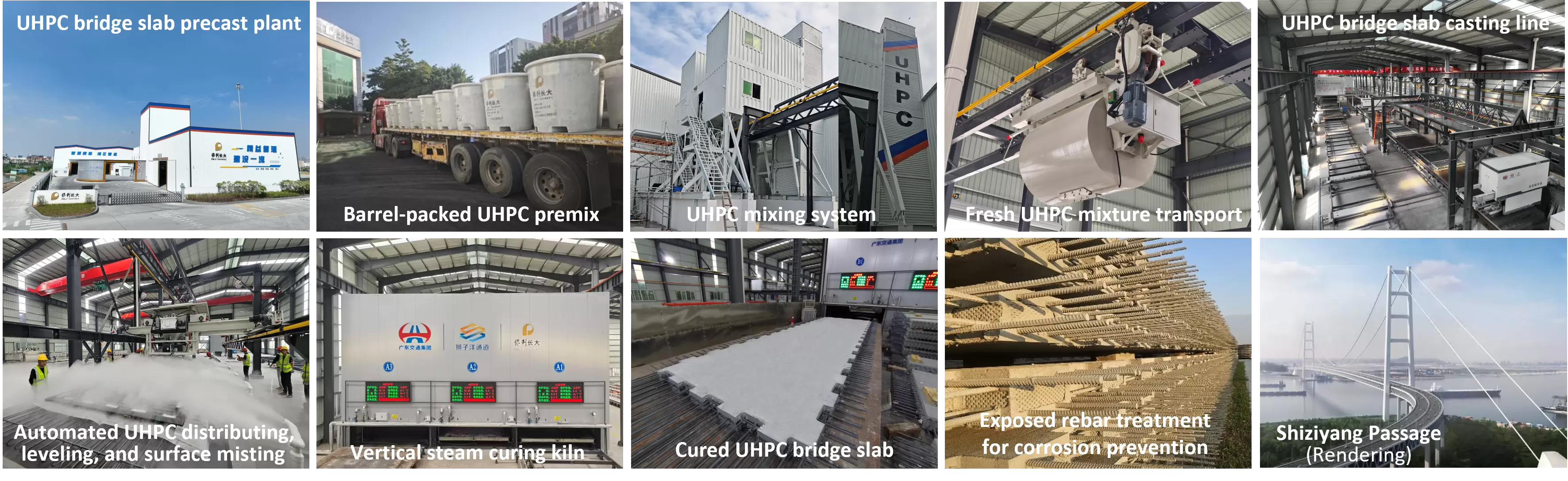
Shiziyang Passage is a large, complex highway project under construction (2022-2029) in Guangdong Province, consisting of 23 bridges & viducts with total length of 34,915m, and including a main bridge – 2,180m span suspension bridge with double-layer steel truss girder to carry 16 lanes. The double-layer steel truss bridge of lead line to the main bridge adopted UHPC (fUc≥140MPa, fUt ≥8MPa, EUc>44.3GPa) bridge decks, requiring 1,818 prefabricated deck slabs with a total UHPC volume of 6,851 m³. In order to meet the quality and delivery requirements of Shiziyang Passage Project, Poly Changda Engineering 4th Company had established a UHPC slabs fabricating plant equipped with a highly automated, efficient production line and quality management system. Its workflow is shown by the pictures below.
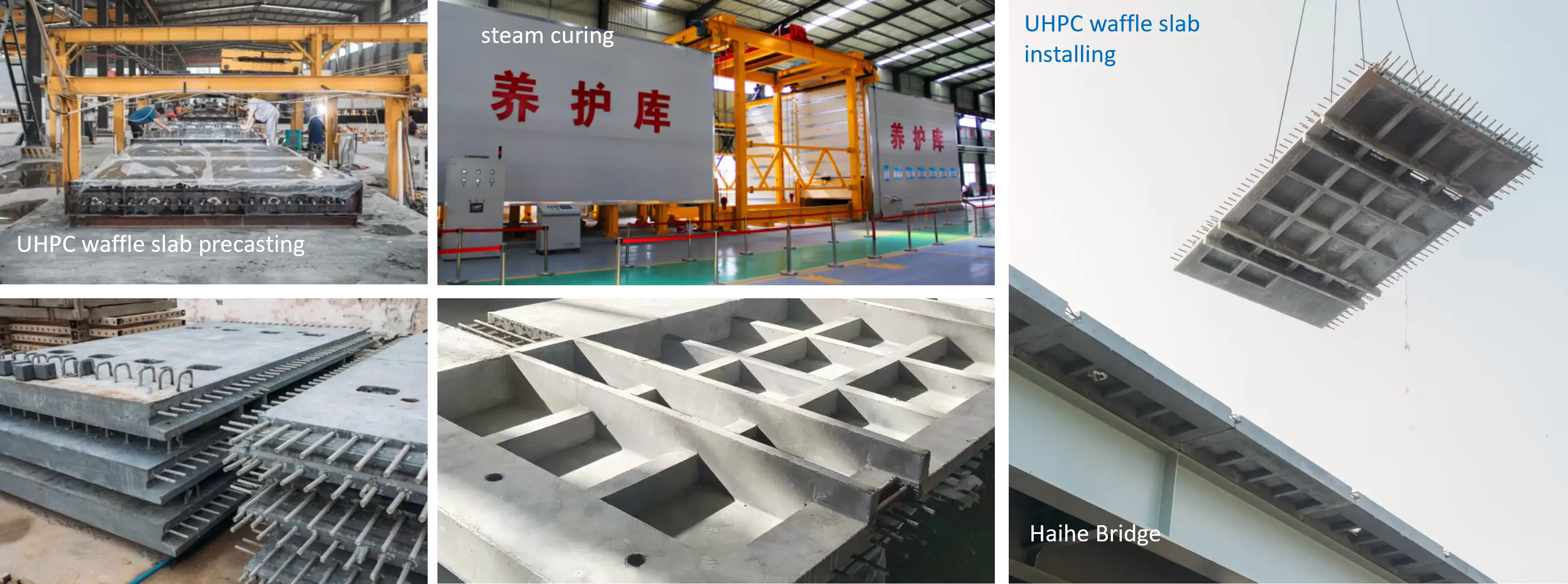
In China, UHPC bridge deck slabs are getting more and more applications for steel-UHPC composte girder, and below pictures show another expample: precast UHPC waffle slabs for Heihe Bridge constructed in 2025 in Shandong Province. UHPC sub-contractor: Shandong Mingda Jianke & Hunan Guli for waffle slab precast and joint connection on site.
Shaped steel-UHPC composite 𝝿 girder: new highway bridge application
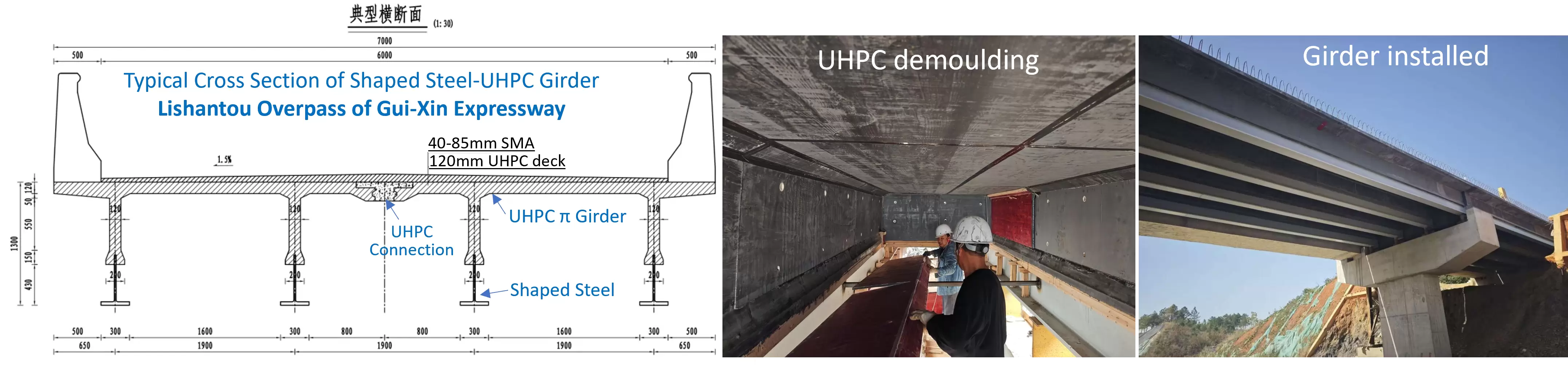
The shaped steel-UHPC composite 𝝿 girder, devepoled by UHPC Bridge R&D Team of Hunan University, was firstly applied for a viaduct project in Changsha of Hunan Province in 2023 (refer to 2023 report of this series), and its 2nd application is Lishantou Overpass of Gui-Xin Expressway in 2025. This overpass has 3 spans (16m + 32m + 16m), net width 6m, consisting of two parallel shaped steel-UHPC composite 𝝿 girders, prefabricated by Hunan Zhonglu Huacheng Bridge Tech. (see graph and photos below). Compared to the traditional PC girder, this composite 𝝿 girder could reduce the girder dead load for more than 50% and girder heigh for 25%, significantly improve bridge durability and crack resistance, therefore, achieving lighter structures, better performance and lower overall costs. More highway bridges with such composite 𝝿 girder are under construction or planning in Hunan Province.
Bridge concrete components connection
UHPC connection for accelerated bridge construction (ABC)
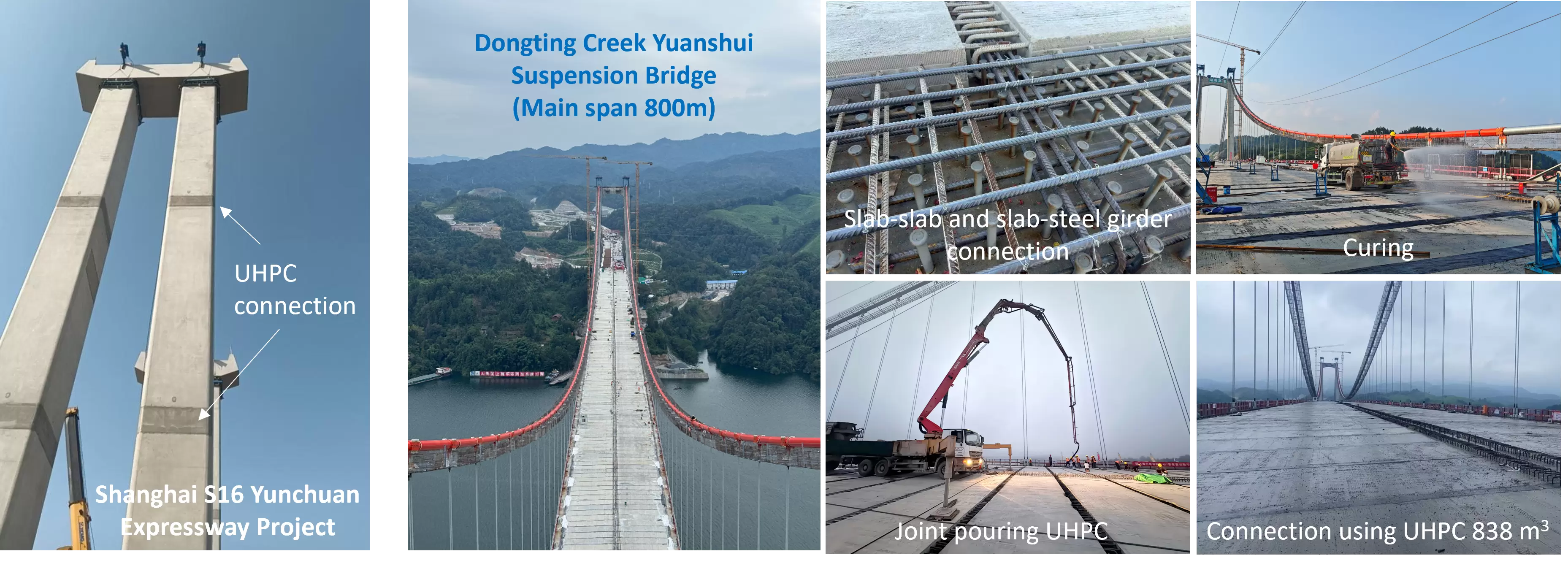
Using UHPC to connect the precast concrete bridge members could obtain strong connecting nodes, effectively improve structural performance, seismic resistance, etc., as well as saving construction time and cost. Thus, this is anther sustained application of UHPC in China – about 20 thousands cubic meter each year in 2023 ~ 2025. Two expamples in 2025: connection of precast concrete column sections by Shangai Swissdam EP Tech. for Shanghai S16 Yunchuan Expressway Project; connection of deck slab to slab and slab to steel girder by China Railway Bridge Science Research Institute for Dongting Creek Yuanshui Suspension Bridge, as shown below.
UHPC for bridge widening – splicing
Many existing highways need to be widened to deal with heavy or increasing traffic, and we often face the challenges: how to add more lanes to existing bridge or how to splice new girders to old bridge then form an intergral bridge deck, where accommodates the uneven vertical deformation between the new and old bridge foundations, as well as other uneven deformations due to temperature changes, shrinkage and creep, and repeated vehicle loading. UHPC connection could provide a reliable solution.
For the Guangshao Expressway expansion project, the full-scale model bending tests, focusing on the performance of two typical joint thicknesses (60mm and 100mm), were conducted jointly by Guangzhou Dingxing Civil Engineering, Guangdong Communication Planning & Design Institute, Harbin Institute of Technology, and South China University of Technology. The test results are encouraging: both joint thicknesses far exceed the Class-I highway standards in terms of crack resistance and ultimate bearing capacity, with a very generous safety margin.
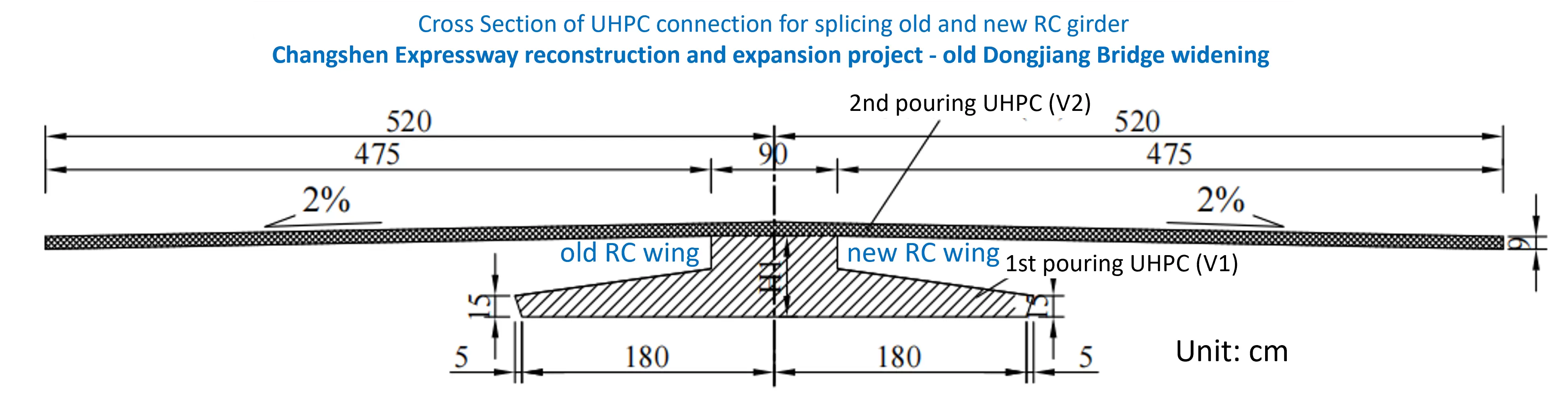
The Changshen Expressway reconstruction and expansion project includes widening old Dongjiang Bridge – a 4-span prestressed concrete continuous box girder (45m + 2×80m + 45m). The wings of new box girder were spliced to the wings of old box girder by UHPC to form an intergral bridge deck, as shown in the diagram below. The reliability of this design was also verified by model tests before construction, and UC130 grade UHPC was applied to the girder wing splicing, executed by Poly Changda Engineering 2nd Company. The traffic loading tests and stress monitoring after the bridge open to traffic confirmed that the spliced structure performs satisfied as expected.
Highlights for Buildings
UHPC for building curtain wall or façade
UHPC is suitable not only for lightweight, large-size, highly perforated, curved, and complex decorative façade or enclosure components with rich surface textures, but also for self-supporting, semi-structural, and structural-function-decorative integrated applications. Moreover, it provides high anchoring strength, good safety, high durability, and maintenance-free performance. UHPC offers new possibilities for architectural expression and performance enhancement for building enclosure, and expands and redefines the boundaries of cement-based materials in architectural applications, therefore, UHPC is getting popular, specially for public cultural buildings. Following projects are examples in 2025.
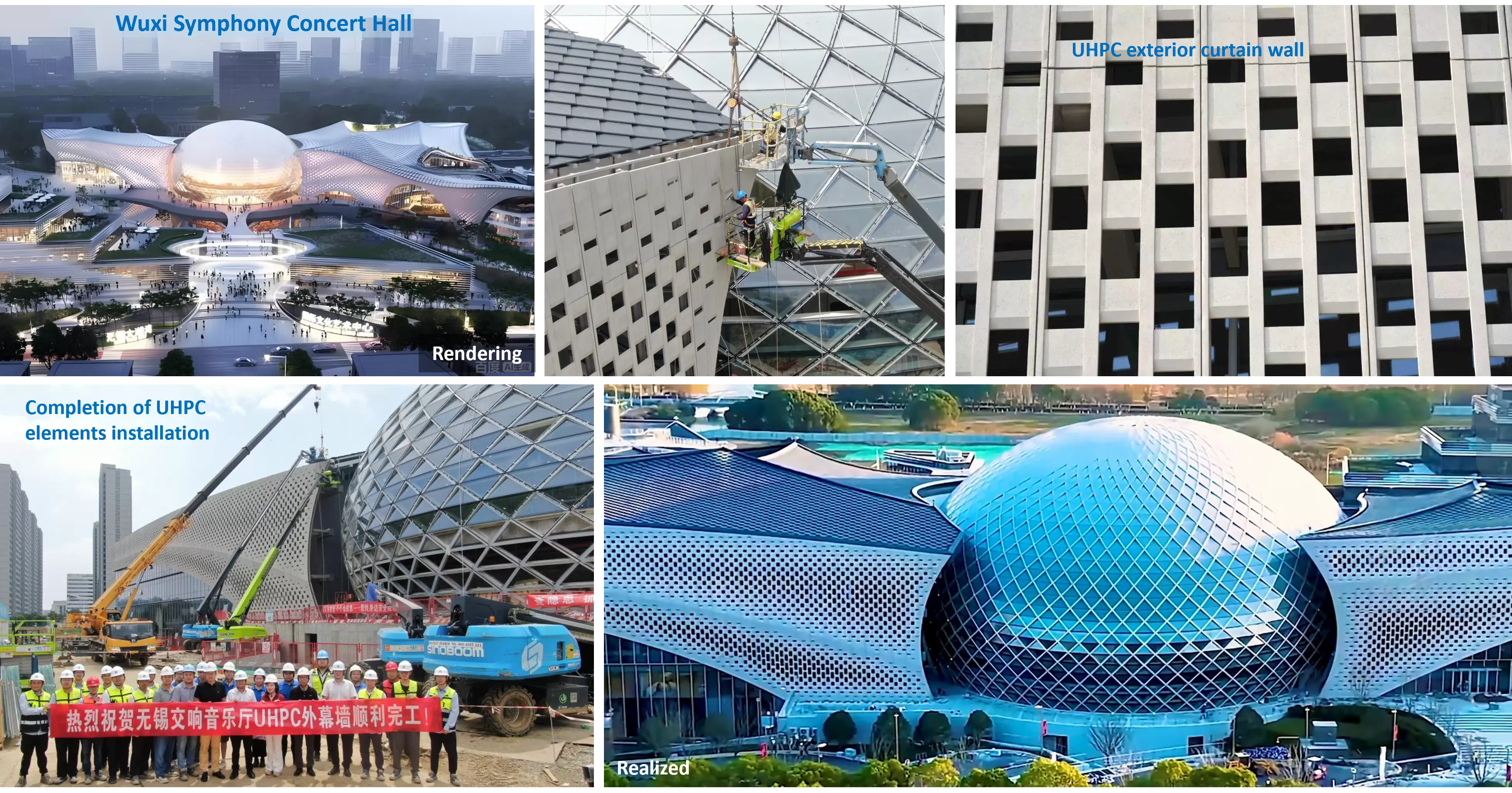
Wuxi Symphony Concert Hall, one building of Wuxi Taihu Bay International Culture and Art Center, has unitized exterior UHPC curtain wall system – consisting of 5,800 prefabricated hyperbolic, highly perforated, stone texture, different sized UHPC elements with the characteristics: the maximum veneer size 4.2m×2.8m, equivalent thickness 30mm; the perforated rate up to 65% for the large elements to achieve visual transparency (see pictures below); using UC150 grade UHPC (fUc ≥ 150MPa, fUb ≥ 25MPa), single-point anchoring force of 28kN (2.8 tons) of embedded sleeves to attain high safety; formwork accuracy controlled within ±0.3mm for precast UHPC elements. In addition, the installation of UHPC elements has achieved spatial positioning accuracy of ±1.5mm and equal joint width of hyperboloid curtain walls by means of a newly developed three-dimensional laser scanning-whole station jointly positioning system. This project condensed material science, structural engineering, and architectural art, providing a valuable example of innovation for contemporary architectural practice in China. Conctractor: 8th Bureau of CSCEC; sub-contractor of UHPC curtain wall: Shanghai Sandali Decoration Engineering; UHPC premix supplier: Jiangsu Subote.
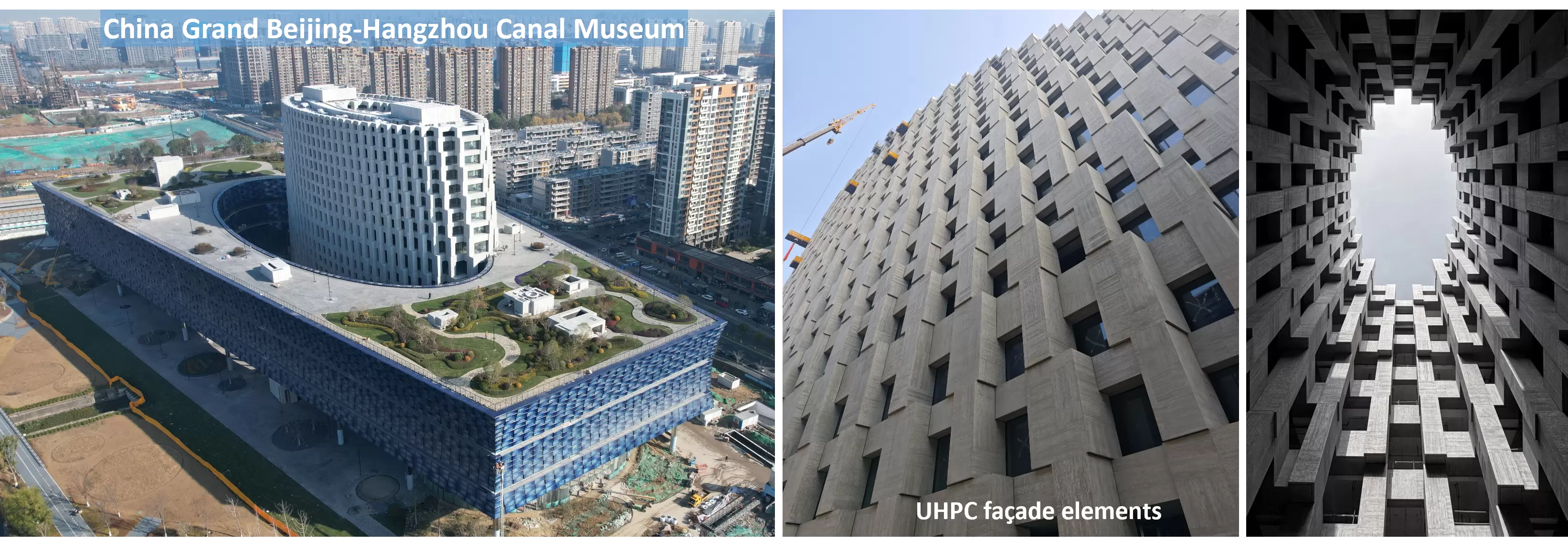
China Grand Beijing-Hangzhou Canal Museum in Hangzhou is shaped as a 'floating boat', architecturally designed by H&dM. The the exterior walls of its main 'floating' hall use UHPC façade elements with a wood grain texture to create a solid, natural 'mountain' impression. The pictures below present the installed UHPC elements, prefabricated by Zhejiang Possible, installed by Zhejiang Jianxin Decoration (for 16,000 m², half of total 32,000 m²).
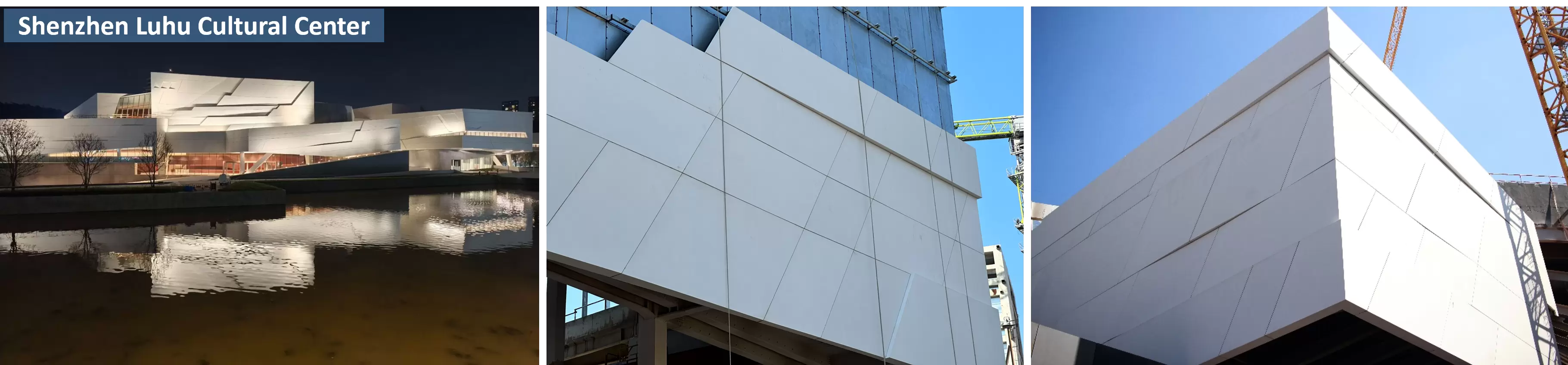
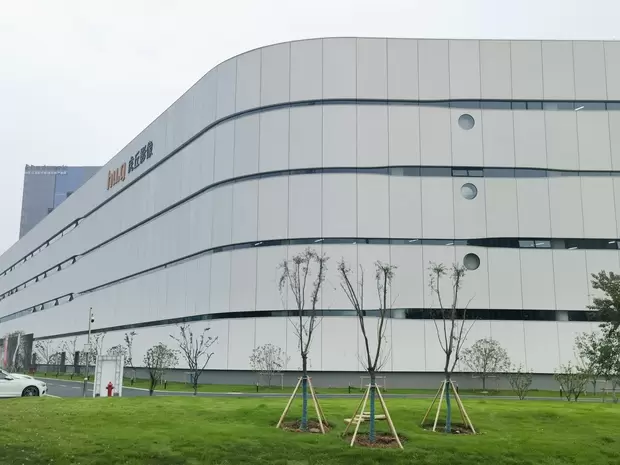
The Luhu Cultural Center in Shenzhen, composed of a grand theater, an art museum, and a library, uses UHPC panels to cover buildings façade of an area nearly 40,000 m², presenting a texture similar to natural stone, in line with the project's nature-inspired design concept. As shown with the pictures below, the UHPC panels with a maximum area exceeding 30 m², a single-face length close to 10 m, and a thickness of 3 cm, with each panel featuring 7 cm edges, form a 'box' structure that enhances the sense of mass. UHPC sub-contractor: Guangzhou Xinshang Art; UHPC premix: partly using Aalborg Excel from Aalborg Portland Anqing of Cementir Group.
UHPC for structural-function-decorative components
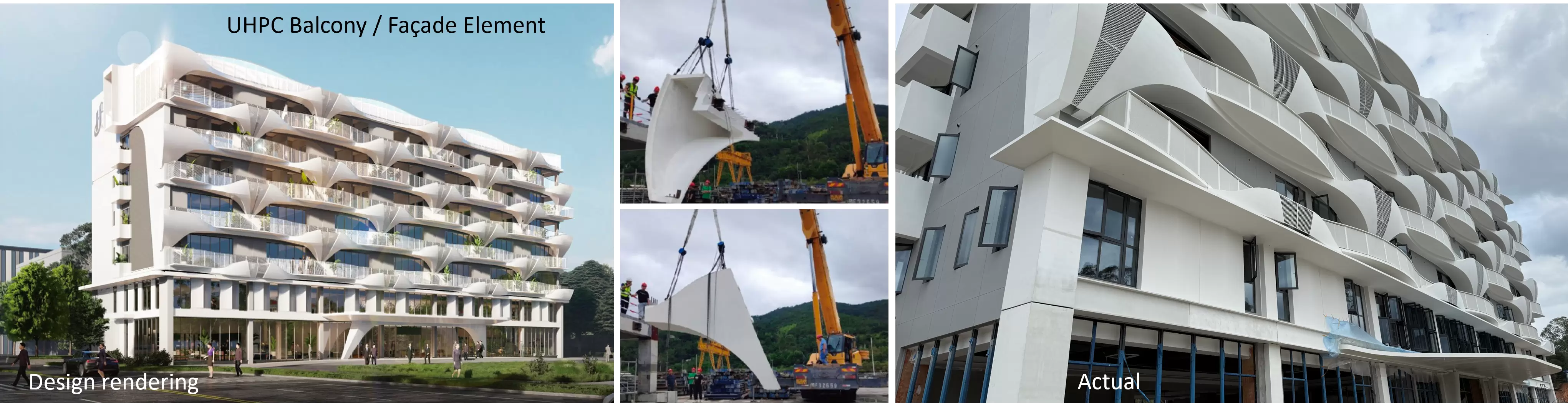
Fujian Huifeng uses UHPC to prefabricate balcony / façade elements for its new building of R&D center, as shown in pictures below. The complex UHPC components, with a length of 3,910 mm, height of 3,300 mm, wall thickness of 20-80 mm, and a cantilever of 1,500 mm, weigh about 2.5 mt each, are directly installed on the main structure of the building. The testing of UHPC cantilever components under both permanent and variable loads showed that deflections meet or exceed national code requirements.
UHPC Components for Subway
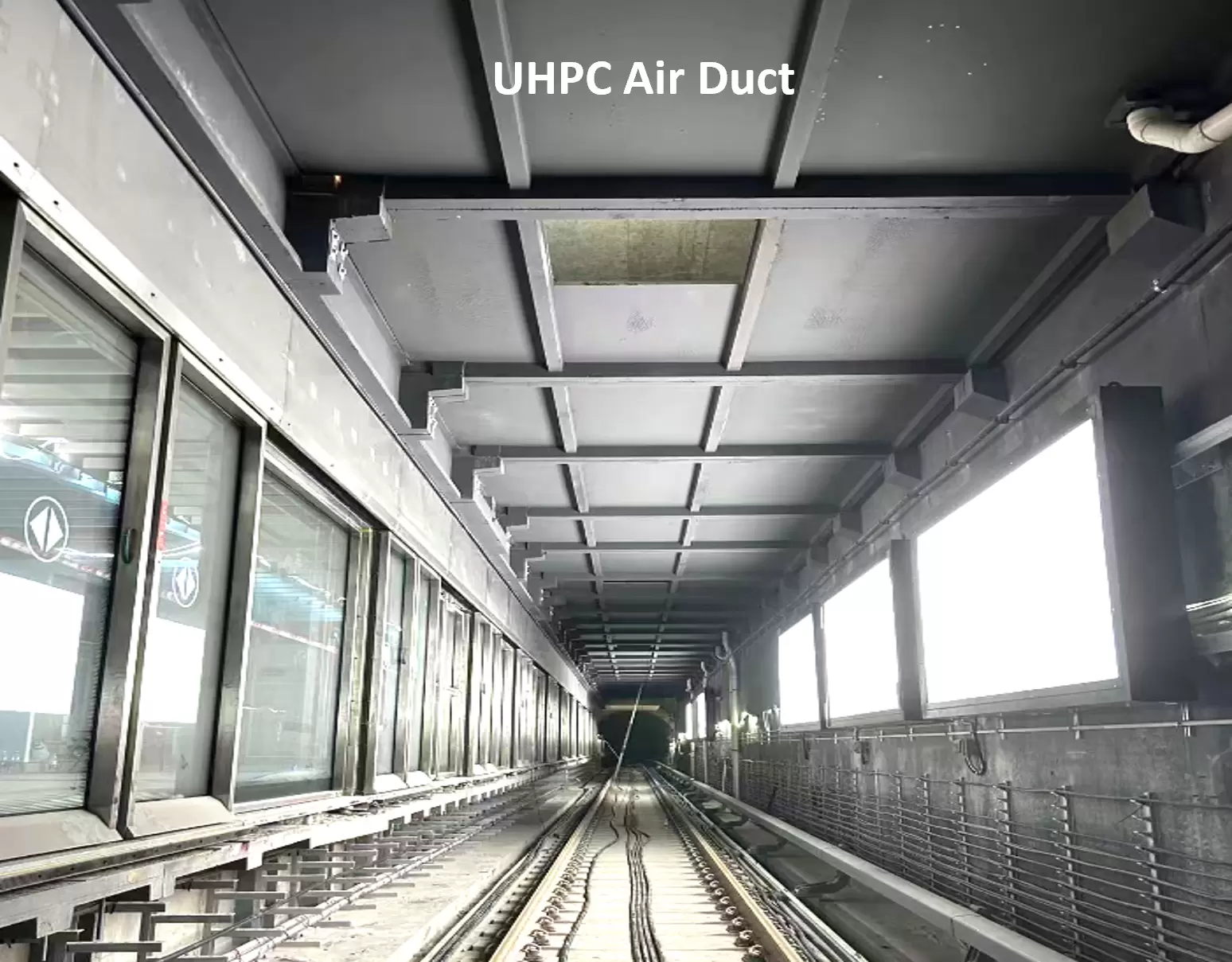
Track-top UHPC air ducts of subway station
Traditionally, track-top air ducts are constructed with cast-in-place reinforced concrete, making the ducts heavy and construction process complex. Guangzhou Huasuiwei has innovatively designed and developed UHPC air duct products (as shown right). These air ducts are integrally prefabricated with UC120 grade UHPC. Tests show that UHPC air duct is not only a light, easy to install, but has excellent structural performance and fire resistance.
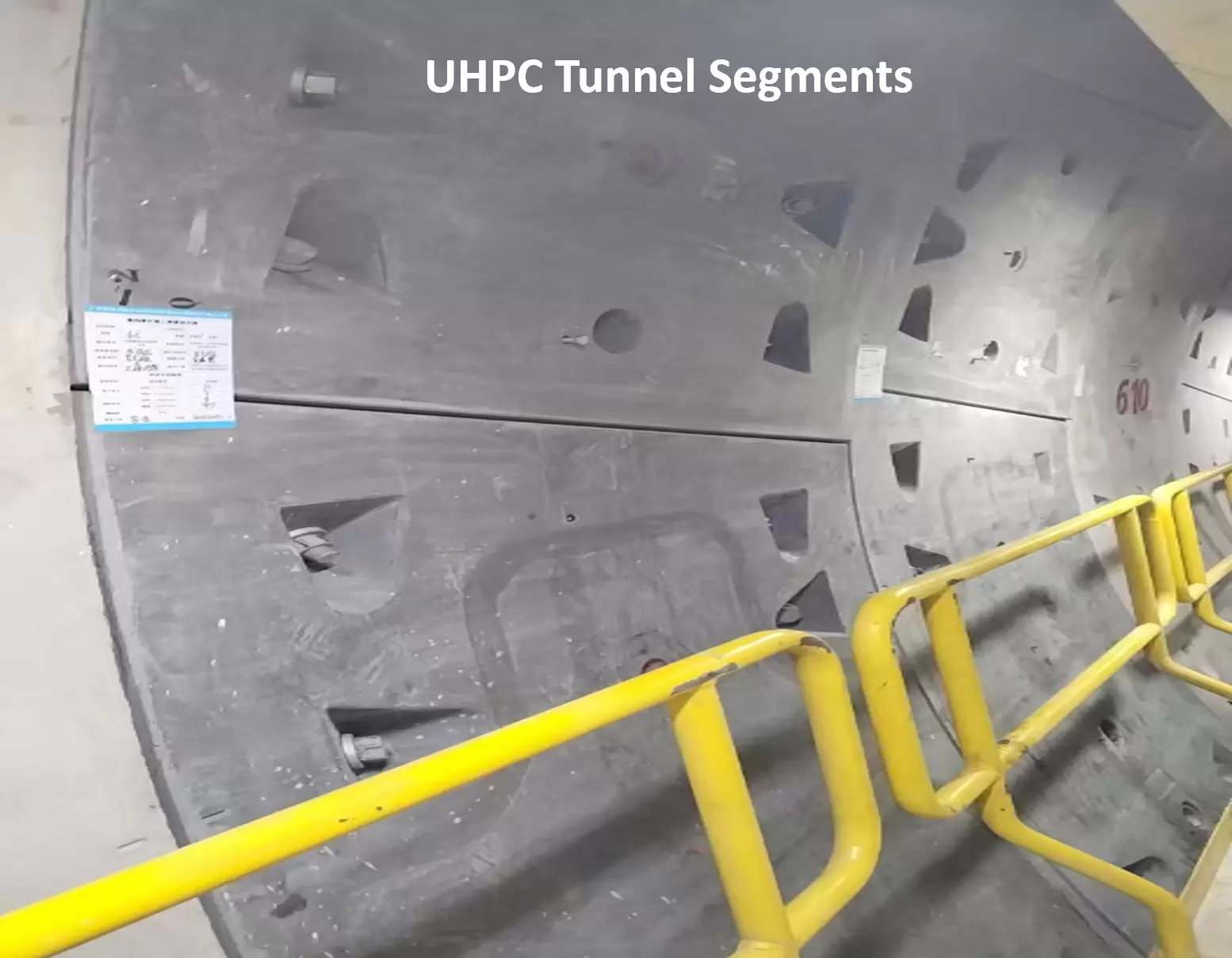
UHPC segment to replace steel segment for tunnel support
TBM tunnel is usually supported and lined with RC segments, when and where TBM tunnel needs an opening, e.g. for the connecting passage of two parallel tunnels, steel segments typically has to be used for tunnel supporting, however, facing serious problem of corrosion and maintenance difficulties in humid, especially in high-salinity, acidic, and other highly corrosive strata. To solve this problem, Guangzhou Huasuiwei has developed and produced UHPC (UC120 grade) segments (as shown right). The advantages of UHPC segment include: same supporting capacity as steel segment, good fire resistance, and expected maintenance-free service life of 100 years.
UHPC Bouncy Ball Design & Making Competition
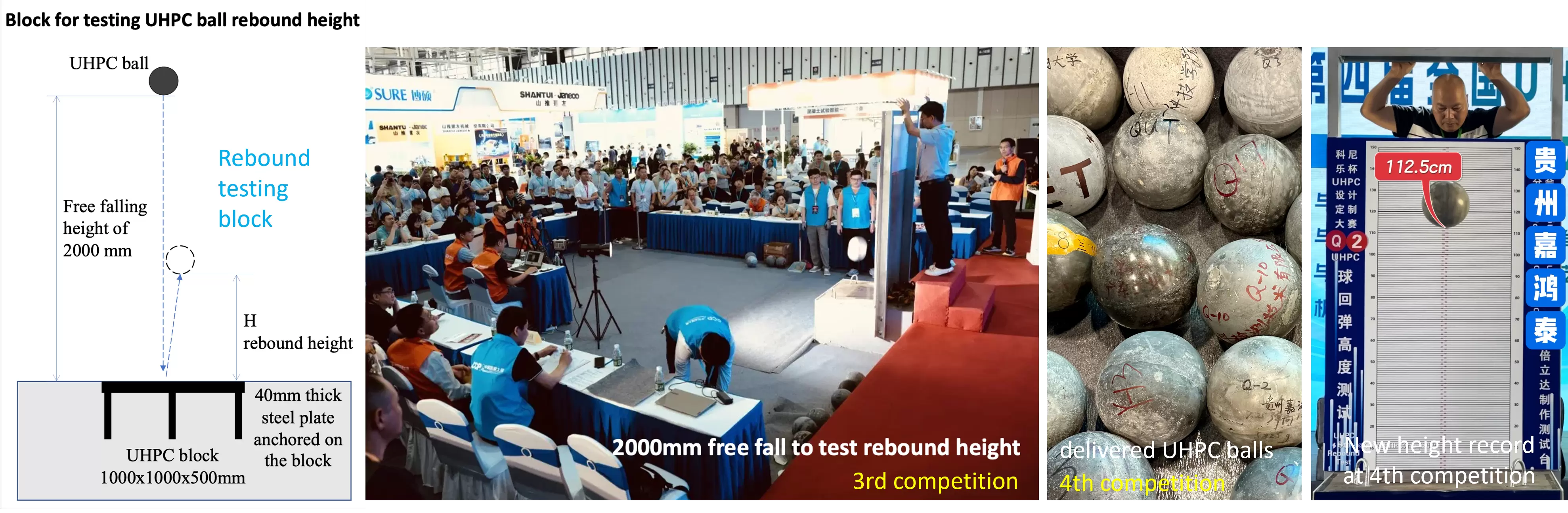
To promote UHPC understanding and practice among students and engineers, CCPA-UHPC organizes the “UHPC Bouncy Ball Design & Making” competition, supported by Co-Nele Machinery. This competition was conceived to contest for UHPC mechanical properties (stiffness, toughness, impact resistance, etc.), for innovative design (strong & stiff but light structure), and for workmanship (ball sphericity, dimension accuracy, surface quality, etc.).
The requirements of the UHPC bouncy ball include: ball diameter: 200±10 mm, ball weight: ≤ 6,000.0 g, UHPC compressive strength ≥ 120 MPa, uniaxial tensile strength ≥ 5 MPa. There are no limitations on fiber reinforcement (types, sizes, shapes & contents) and curing methods. Judging criteria include: design description, ball size accuracy, surface quality, first rebound height of free-falling, and cracking width after the impact. The rebound test is conducted on a rigid UHPC block with an anchored 40 mm thick steel plate as the collision surface and a steel frame installed for ball drop, as illustrated in the diagram below (left). The UHPC ball is dropped from a height of 2,000 mm, and the height of the ball’s first rebound takes the major weight of scoring.
Till 2025, four competitions have been organized during the China International Concrete Expo, and a total of 138 teams from colleges and enterprises participated in the competitions. It’s an interesting and exciting contest for the rebound testing, attracts a lot of people to watch (see photo below). In the 4th competition, a new record of rebound height, 112.5 cm has been created (see video below). Its bouncy is visually showcasing how high the toughness, stiffness and rigidity of UHPC can attain.
Authors

Jun ZHAO
Jun ZHAO is the Secretary General of UHPC Branch-association of China Concrete & Cement-Based Products Association (CCPA). He graduated from Tongji University in 1985, received a master's degree in engineering from Beijing Municipal Engineering Research Institute in 1988. His working experiences since 1988 mainly engaged in R&D for cement-based materials and technical service for concrete durability, HSC, SCC, UHPC, as well as use of silica fume. He currently works for promoting the technology development, applications and standardization of UHPC at UHPC Branch-association of China Concrete & Cement-Based Products Association (CCPA).
Share on