
The Chizhou Yangtze River Bridge in Anhui, China, combines advanced white concrete technology with a distinctive architectural concept inspired by Buddhist heritage. Using approximately 5,000 tonnes of AALBORG WHITE® cement, its landmark towers feature a functional outer layer of white fibre-reinforced concrete, demonstrating how white concrete can deliver both structural performance and architectural expression in large-scale infrastructure.
Located above the Yangtze River in Anhui Province, the Chizhou Yangtze River Bridge is the first bridge in China to use white cast-in-situ concrete. Connecting Tongling and Chizhou, the bridge forms an important link in Anhui’s “Five Longitudinal and Nine Transverse” expressway network and opened to traffic in May 2019.
Beyond its role as a major piece of transport infrastructure, the bridge demonstrates how advanced concrete technology can bring together structural performance, architectural expression and local cultural identity.
A Landmark Inspired by Buddhist Heritage
The bridge design draws inspiration from the Buddhist culture of nearby Mount Jiuhua, one of China’s important Buddhist sites.
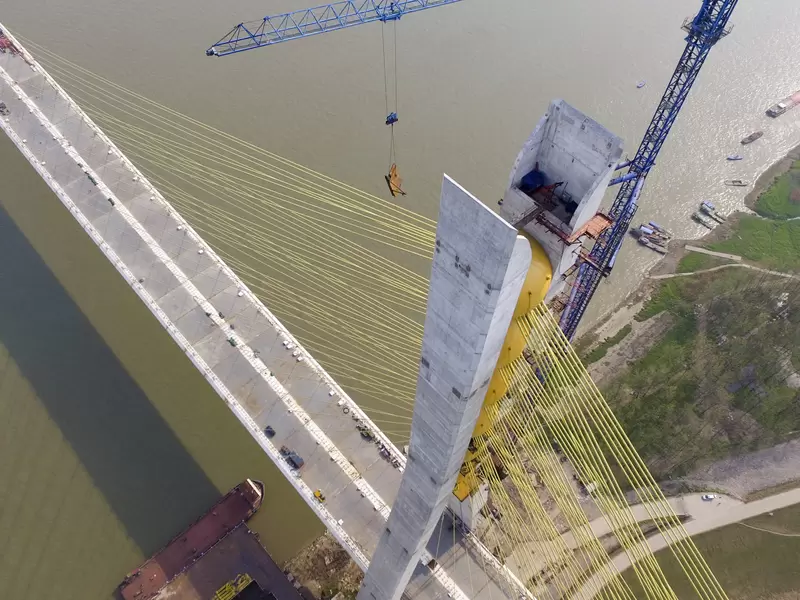
The two cable-stayed towers, standing at 237 and 246 metres respectively, take the form of elegant vases and incorporate several Buddhist motifs. Their shape evokes two hands held together in prayer, while the yellow steel spheres around the bridge beams represent Buddhist beads. The cables radiating from the towers suggest rays of light.
The combination of white and gold reinforces this visual language. The white concrete represents peace and purity, while the golden elements add a sense of energy and grandeur.
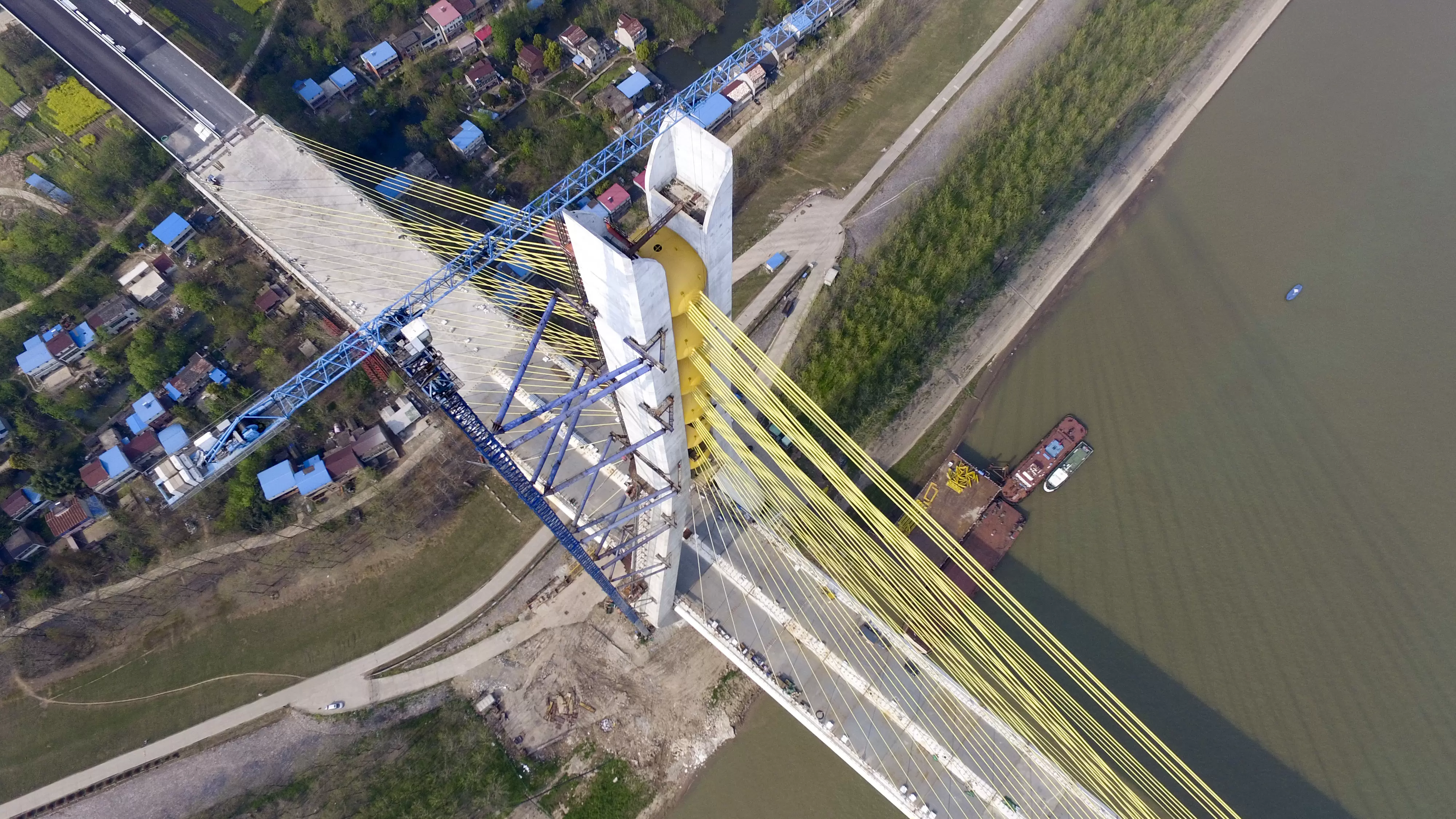
The result is more than a functional bridge: the structural elements themselves become part of the architectural narrative.
White Concrete as a Functional Structural Layer
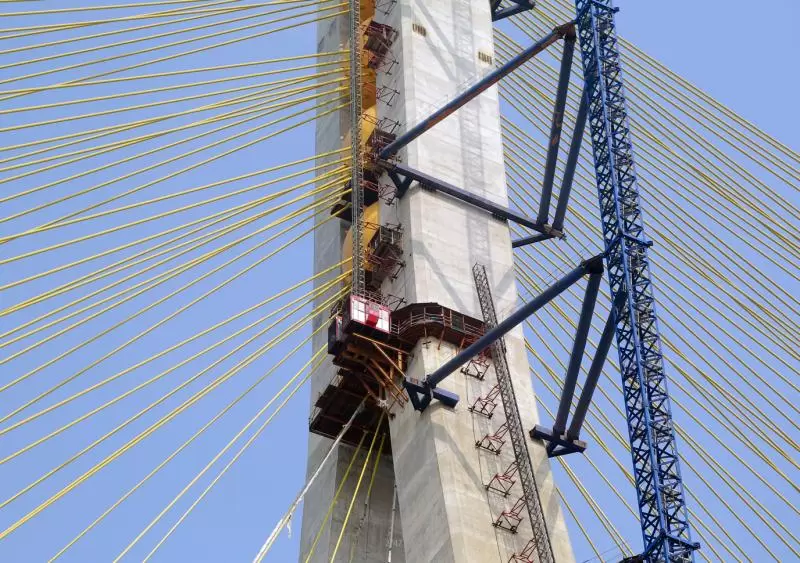
The bridge’s two main towers incorporate a pioneering “skin-like functional concrete” system.
Rather than constructing the towers entirely from white concrete, the system combines two layers with different functions. A 36-centimetre-thick outer layer of white fibre-reinforced durable concrete, produced using AALBORG WHITE® cement, surrounds a conventional C50 concrete core.
Inspired by the principle of the human skin, this heterogeneous composite structure gradually varies the composition and properties of the material. The approach helps to control internal stratification and interfacial stresses while improving crack resistance, durability and surface quality.
This combination of materials allows the outer layer to provide both a distinctive architectural finish and enhanced functional performance, while the conventional concrete core fulfils the primary structural requirements.
5,000 Tonnes of High-Strength White Cement
The project used approximately 5,000 tonnes of AALBORG WHITE® 52.5 high-strength white cement.
For a bridge of this scale, the choice of white cement was not simply an aesthetic decision. The white fibre-reinforced concrete formed a functional part of the tower structure, requiring high levels of performance as well as a consistent, durable appearance.
The project therefore demonstrates how white concrete can move beyond decorative applications and become an integral part of large-scale infrastructure.
Overcoming the Challenges of Construction
As the first application of white fibre-reinforced high-performance concrete as a functional layer for a major bridge tower in China, the project had little precedent to draw upon.
The combination of an external white concrete layer and an ordinary concrete core introduced additional technical requirements, particularly around compatibility, insulation and construction control.
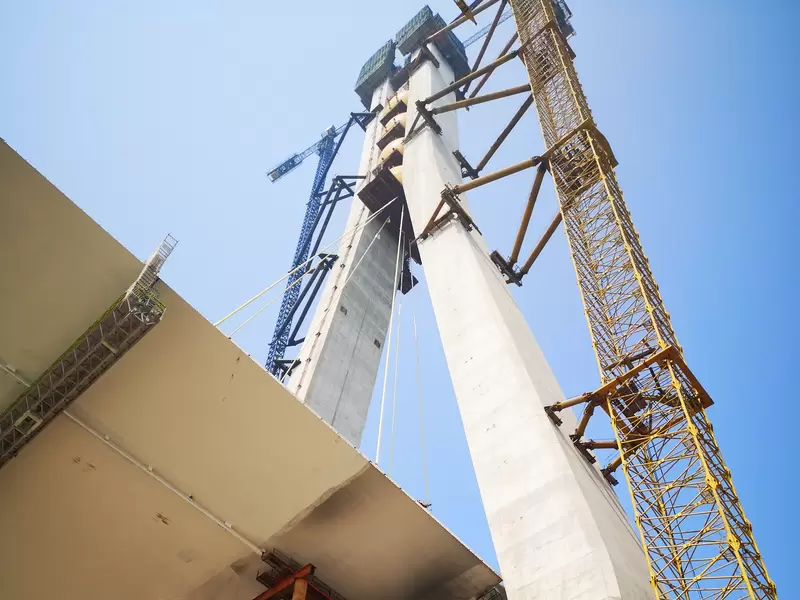
The scale and height of the towers added another layer of complexity. Two sets of mixing, pumping and pouring equipment had to operate simultaneously at high altitude to ensure the different concrete layers could be placed effectively.
Achieving the required crack resistance, durability and visual consistency therefore demanded close control throughout the concrete production and construction process.
Where Engineering Meets Cultural Expression
The Chizhou Yangtze River Bridge demonstrates the potential of white concrete to play a much broader role in infrastructure design.
By combining high-performance materials with a strong architectural concept, the project transforms the bridge towers from purely structural elements into a distinctive landmark rooted in local culture.
It is an example of how material innovation can help infrastructure achieve something beyond engineering performance: a sense of identity, permanence and place.
Project Information:
Year: 2015
Main Construction Material: Cast-in-situ Concrete based on AALBORG WHITE® cement
Construction company: Zhongjiao Road Bridge Construction Co. LTD
Designing company: China Railway Major Bridge Reconnaissance & Design Institute

Authors

Ella Bi
Group White Cement Marketing Manager with over 15 years of experience in the white cement industry. She drives the Aalborg White ® brand and its innovative, lower-carbon product portfolio, including InWhite® solution and D-Carb®, through integrated marketing communications. She develops the White-Hub platform, fostering a global white cement industry ecosystem and strengthening the brand’s international presence.
Recommended Posts
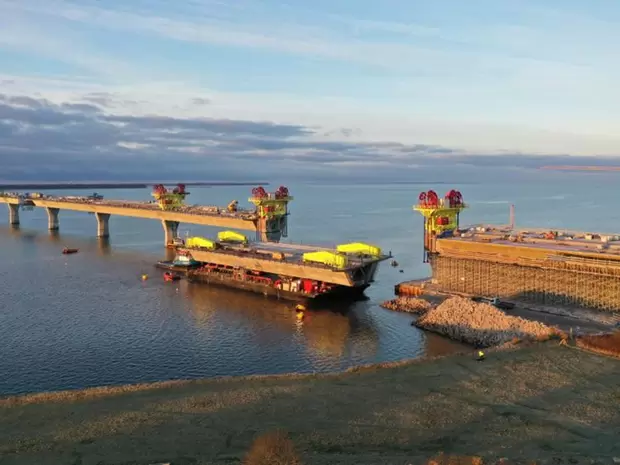
The Invisible Choice That Will Keep Denmark's New Bridge Strong for More Than a Century
The Reach, the Kennedy Centre for the Performing Arts | White Cast-In-Situ Concrete
Share on